

We design every Applied Behavioral Analysis plan for your family’s unique needs, in Homestead and the surrounding areas.
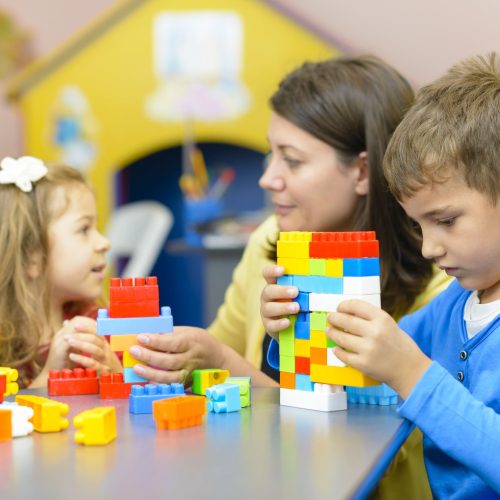
The earlier children with autism start treatment, the more likely they are to see long-term success and positive impacts.
The brain has higher neuroplasticity so it’s easier for kids to develop positive behaviors Problem behaviors will be reduced before they become habits.
ABA will focus on Improving communication and social skills. School and classroom readiness, your child will learn to seat during circle time, or at a table and focus.
This program provides child and parent empowerment and increases chances of catching up developmentally to peers.
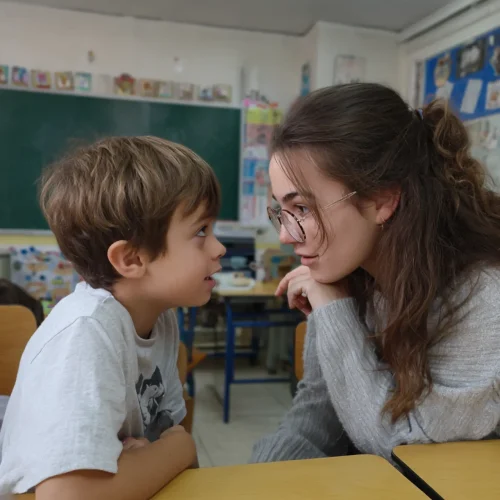
Parents will be provided with strategies to use to reduce problem behaviors at home or public places.
ABA parent training is an important part of any ABA program. It involves teaching parents critical skills to ensure generalization, improve functioning in the natural environment, reduce the parent’s stress level, and generally make life more enjoyable for everyone.
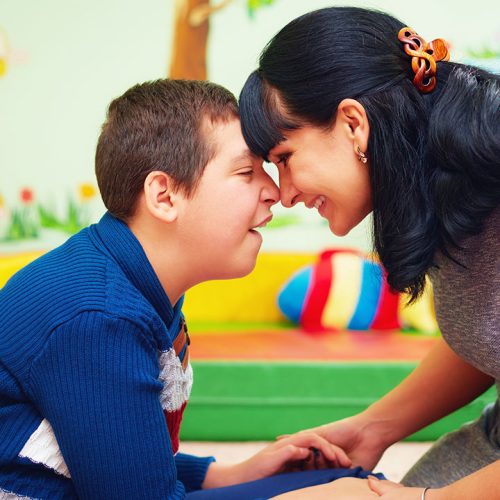
Focused on teaching children to play with others, wait for their turn, have a conversation, make a friend.
Social skills program will focus on creating connections.
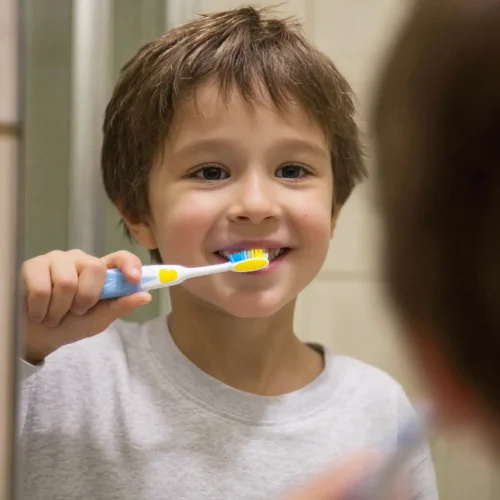
ABA can focus on teaching your child according to their age toilet training, washing hands, brushing teeth, dressing, using money, going to a supermarket, preparing a meal, and crossing a street.
Your child or teenager will learn skills that will prepare them for independency.

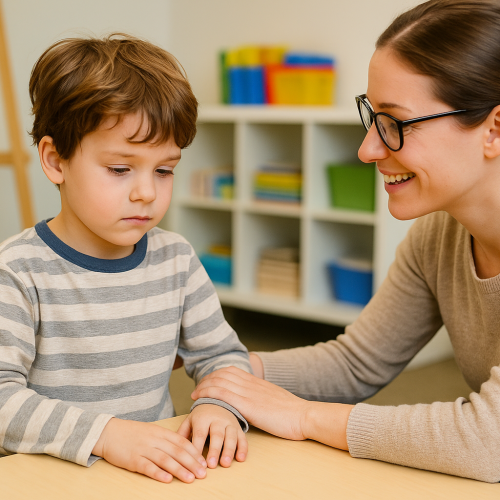
Verbal Behavior Programs will focus on helping kids that have problems communicating. This program will teach your child to make eye contact, request objects, imitate, follow instructions, identifying objects, matching, identifying actions, answering questions, describing events, telling stories, and so on.
We will focus on helping your child to communicate by talking, using sign language or PECS.
Behind every goal is a child—and a family doing their best. These three stories share what happens when ABA is individualized, consistent, and focused on what truly matters: meaningful communication, independence, and safer behaviors. Watch the video and see how our team supports families step by step.
Starting point: A arrived at our center at age 3½. His mother’s main concern was frequent tantrums, especially during transitions. His language skills were at approximately a 2-year-old level based on the VB-MAPP.
Intervention: A behavior plan and skill-building program targeting areas of need such as labeling objects, naming family members, imitation, and identifying items, delivered consistently over five years using Discrete Trial Training and Incidental Teaching.
Key outcomes (today):
A receives support at school and is working on reading comprehension, completing assignments independently, and developing social skills to play and interact with peers.
He can greet adults appropriately when they arrive.
He can identify emotions and is learning strategies to manage frustration when things don’t go as expected.
Starting point: E began ABA therapy at age 2 with developmental delays and had only started walking a few months prior. He had a repertoire of about 10 words, could not imitate movements, and could not follow simple instructions. Based on the VB-MAPP (Verbal Behavior Milestones Assessment and Placement Program), he was functioning below an 18-month level. E also had episodes of aggression and elopement (running away) at home and in public settings.
Intervention: Intensive treatment using preferred reinforcers, with systematic instruction in imitation, labeling objects, labeling actions, and answering questions.
Key outcomes:
At age 7, E independently greets others, makes eye contact, and requests items using complete sentences.
He has been using the bathroom independently for almost two years.
He is progressing in self-care skills, including learning to tie his shoelaces.
Episodes of aggression and elopement have been reduced to near zero.
Starting point: When C began services at age 3, he primarily screamed, did not use spoken words, avoided eye contact, and displayed aggressive behaviors toward others and himself.
Intervention: Services started in the home and, when appropriate, at school based on his needs. We first focused on building functional communication by adjusting the environment to encourage sounds and requests for preferred items. When progress remained slow and challenging behaviors increased, we introduced basic sign language, which helped him begin communicating with simple signs. About a year ago, we observed increased interest in vocal sounds, and we transitioned to a picture-based communication system on his iPod.
Key outcomes:
Today, C uses pictures to combine at least three words to communicate what he wants.
Therapy continues to target spoken word production.
A major milestone was toilet training: about a year ago, we successfully trained C to stop using diapers and use the bathroom. This goal required an intensive focus of approximately six months, temporarily pausing other skill targets. During sessions, diapers were removed and scheduled bathroom trips were implemented (about every hour) with highly preferred reinforcers.
C has fully achieved this goal and is now working on greater independence with wiping and dressing after using the bathroom.
His aggressive behaviors have decreased significantly.
For your convenience, here are some frequently asked questions from parents and our answers. If you have any other questions or concerns please feel free to contact us.
According Autism Spaks, ABA is considered an evidence-based best practice treatment by the US Surgeon General and by the American Psychological Association.
“Evidence based” means that ABA has passed scientific tests of its usefulness, quality, and effectiveness. ABA therapy includes many different techniques. All of these techniques focus on antecedents (what happens before a behavior occurs) and on consequences (what happens after the behavior).
ABA can focus on this areas:
The instruction plan breaks down each of these skills into small, concrete steps. The
therapist teaches each step one by one, from simple (e.g. imitating single sounds) to
more complex (e.g. carrying on a conversation).
The BCBA and therapists measure progress by collecting data in each therapy session.
Data helps them to monitor the person’s progress toward goals on an ongoing basis.
The behavior analyst regularly meets with family members and program staff to review
information about progress. They can then plan ahead and adjust teaching plans and
goals as needed.
After an evaluation, a BCBA (Behavior Analyst) will determine how many hours of service are needed.
The amount of hours depends of the intensity and frequency of the problem behaviors and skill deficits.
It I also important to consider the medical necessity, referring to how behaviors interfere with
functioning of the children in different settings or put him at risk of harm him/her self or other around.
The maximun of hours of ABA could be until 30 hours.
Two staff members will be working with your child. A Registered Behavior Technician will provide direct
services. The RBT will work under the supervision of the Behavior Analyst (Board Certified Behavior
Analayst). The Behavior Analyst will provide parent training and complete a reassessment every six
months until case is successfully discharged.
Services could be in place for years. We work with ages until 21. Once your child generalizes and he/she
is able to practice the skills he has learned independently in different settings or with different
individuals. Once problem behaviors are not affecting his/her daily life, your child will successfully
discharged.
ABA therapy can be implemented at home, school, or our clinic.